How to Quilt with Appliqué

Fuse Shadow Appliqué
By Terry White

Shadow appliqué is simply adding a background to an appliqué that is cut around the appliqué shape. It separates the shape from the quilt. In this case, it is important because the blue cat would fade right into the blue sections of the quilt. This would give an awkward shape to the cat. The yellow also accentuates the appliqué so that it has more presence in the quilt….it makes the cat shape a bigger deal.

The Blue Cat
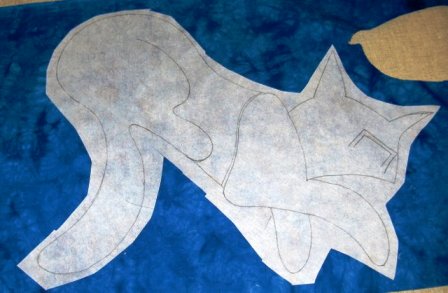
1-fused-applique-cat-448x293
Trace the cat pattern pieces onto the fusible web. I have traced all the pattern pieces together onto the fusible web so that you can see the shapes together. Be sure to reverse the pattern so that the cat faces the left.
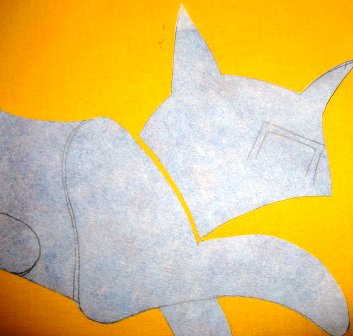
2-cat-applique-353x336
Iron the blue fabric to the web and cut out the cat. The blue fabric that I chose is a deep blue with soft texture. I think that the texture makes the cat livelier.
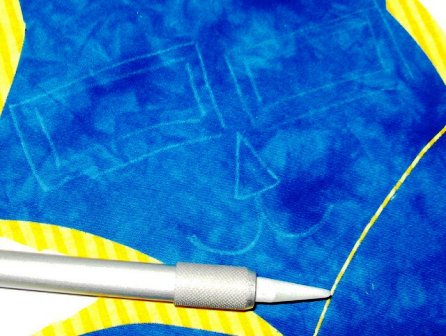
4-trace-cat-face-446x336
Trace the cat’s face onto the blue fabric. I used a graphite marker. The graphite marker lasts forever and works on dark fabrics.
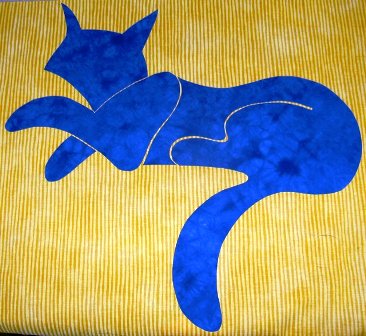
5-fuse-blue-cat366x336
Fuse the blue cat to a yellow piece of fabric. The yellow stripe fabric adds a bit of humor to the cat. Rough cut the yellow fabric about half an inch around the cat shape.
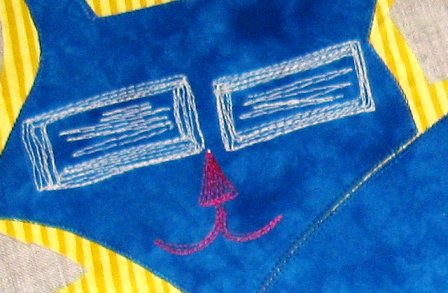
6-thread-paint-cat-face-448x293
The yellow fabric acts as a stabilizer. Now, the cat’s face can be hand embroidered, painted, stenciled, or stitched with free motion embroidery (as I have done). I used white and fuschia STAR cotton threads to do the embroidery. Use your favorite technique for this detail work.
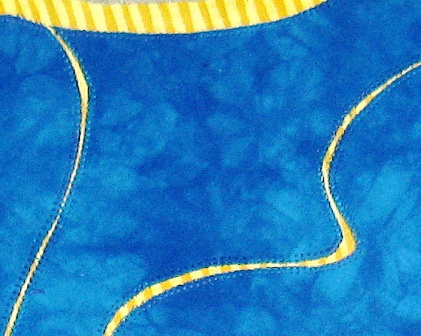
7-stitch-blue-cat-421x336
Stitch the blue cat to the yellow fabric. Use the same stitching method as with the leaves and oranges. I used a variegated blue cotton thread to do the stitching. It blends in best with the mottled blue color fabric.
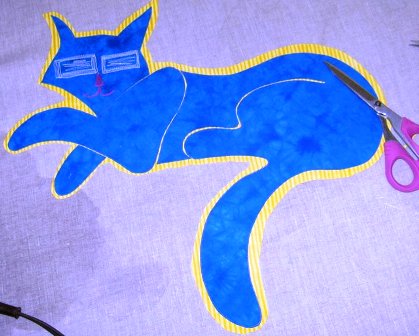
8-trim-yellow-419x336
Trim the yellow fabric to create the cat’s shadow. At this point, after embroidering the face, I pressed the appliqué. Then, I carefully trimmed the yellow shadow to make a nice smooth shape. Notice that the yellow shadow is thin in some spots and thicker in others. This was done to make a pleasing silhouette.
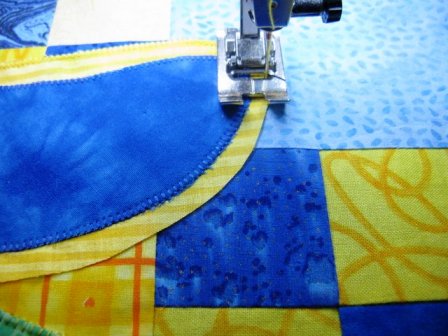
9-stitch-yellow-to-quilt-448x336
Pin the cat appliqué in place and stitch as with the oranges and leaves. I used a bright yellow variegated cotton thread to stitch the cat to the quilt top.

Sometimes, people like to cut the pieced fabric from beneath the appliqué shapes. It does make it easier to quilt. In this case, I chose to keep the pieced top intact. This will be a picnic quilt that will be well used and I want to keep the integrity of the patchwork intact for strength.
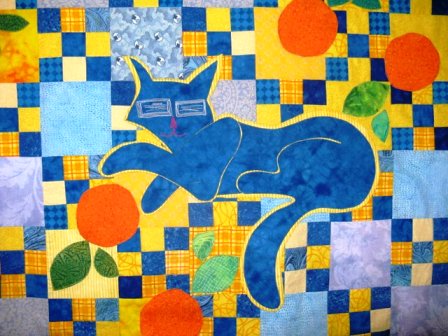
10-blue-cat-quilt-448x336
Here the blue cat is stitched to the finished quilt top. The blue cat looks very happy among the oranges on this picnic quilt.

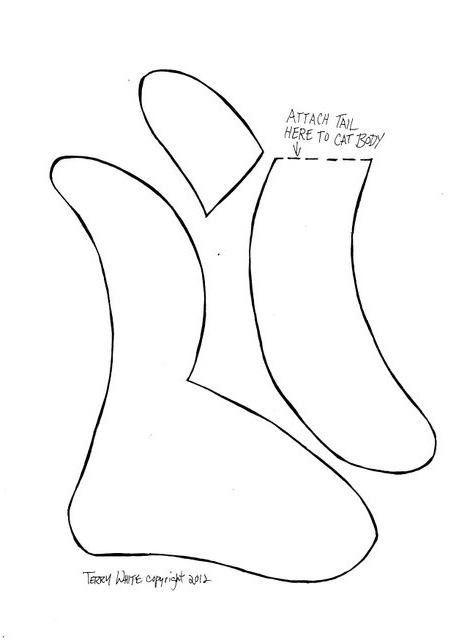
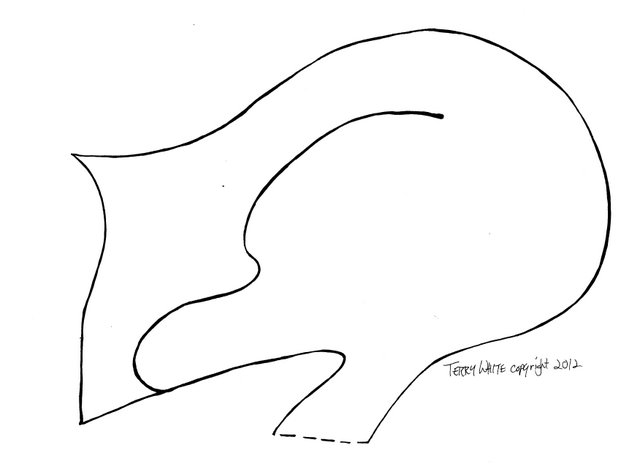
Here are the pattern pieces for the Blue Cat With Oranges quilt.
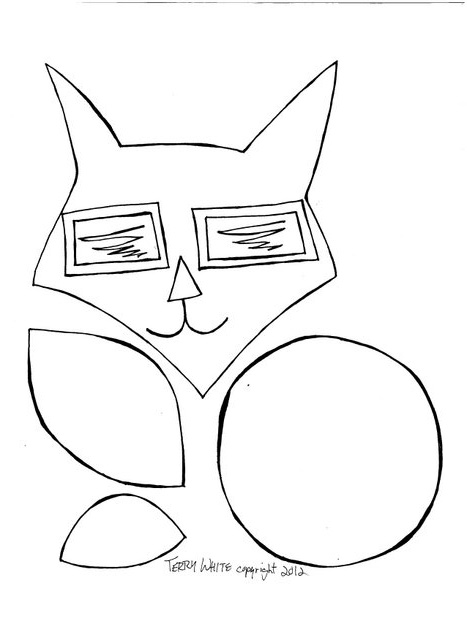
pattern-1-blue-cat-and- oranges-467x640

Pattern 1

pattern-2-blue-cat-and-ornages-467x640

Pattern 2

pattern-3-blue-cat-and-oranges-640x467

Pattern 3

For the best Applique Scissors Click Here

For more articles by Terry White, click here.

Posted in Free Quilt Projects, Fuse Shadow Applique, Guest Writers, How To, Terry White, Uncategorized | Tagged , , , | 2 Comments

How to Make A Scarf for Summer

Make A Summer Scarf
By Holly Hanover

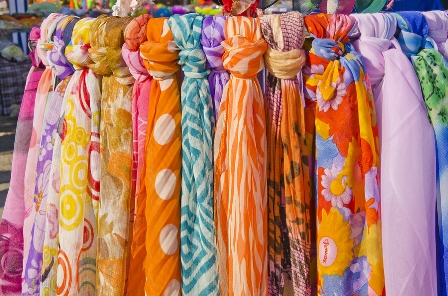
Multicolor shawls and scarves.

Scarves are a perfect accessory. They can add visual interest to any outfit, enlivening it with contrasting prints, colors and textures. Most scarves are impractical for summer, however. We all have a few thick scarves for the winter months. When the first flowers begin to bloom and we begin thinking planning our summer swimsuit shopping, however, we instinctively put them away, forgetting about them until the following autumn.

But there’s no rule that says scarves need to be restricted to the winter months! Certain scarves are too hot for summer, of course, but by selecting the right fabric you can make one suitable for summer. When you know how to make a scarf, you’ll be able to craft a unique and fun accessory that can add interest to any outfit.

The best summer scarves are made from lightweight fabrics like Gingham, Seersucker, Gauze, and Percale cotton. Percale often comes in darker colors, while Gingham is great if you want a light fabric with patterns of checks, plaids and stripes. Gauze is perfect if you want to create a somewhat fey and ethereal scarf – perfect for a romantic getaway or picnic. You’ll need between half a yard and a yard of your chosen fabric to make a scarf.

You will only need a few other items to make your fun summer scarf:

Havel’s Fabric Scissors

• Your Favorite Sewing Machine

Havel’s Ultra-Pro Seam Ripper

Here are simple instructions for making a scarf of lightweight fabric. The following instructions  will work best for silk organza which is one of the most lightweight fabrics.

Cut  the fabric rectangle the size you want your scarf to be. Add one inch to the length and width of the scarf for seam allowances. When working with a lightweight fabrics it is a good idea to prepare them first by spraying all the edges with a good spray starch.  Mary Ellen’s Best Press works beautifully. You are taking a soft fabric and adding body so that it is easier to work with.  Let the fabric dry a little and press. You can repeat this three times. (When you wash the scarf all the stiffness will disappear.) Choose a needle for lightweight fabric. A 75 will work well. Use a utility sewing foot with a flat back and set the machine for a zigzag stitch. The width is 1.5 and the length is 2.

Fold 1/2″ of the edge underneath the fabric and sew along the folded edge. Remove the excess edge by cutting close to the stitch. Applique scissors were made for this. Havel’s offers several options:  Straight Serrated Fabric Scissors,  Duck Bill scissors or the Double Curved Applique will make short work of this project.

Now you can create a summer scarf with just a few yards of lightweight fabric and a pair of Havel’s Scissors. However you choose to do it, it’s easy to craft a delightful and unique accessory once you know how to make a scarf!

Get the Tools You Need
For Your Summer Scarf Here!

Posted in Uncategorized | Tagged , , | Comments Off on How to Make A Scarf for Summer

What is Tatting?

By Holly Hanover
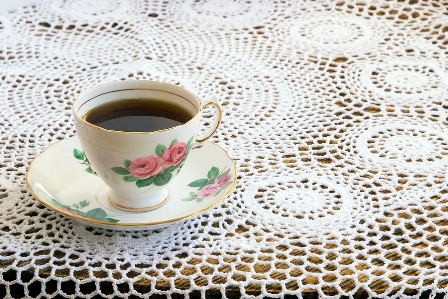
Vintage Teacup on Crochet Tablecloth
If you are already a keen needleworker, there’s a good chance that you are constantly on the lookout for new threadwork skills to add to your repertoire.  Although you may have tried lace-making in the past, or even shuttle tatting, one technique that you may not have come across – and which, once mastered, is one of the most portable thread crafts to carry around with you  – is needle tatting. 
What is Tatting?  Even from an experienced craft hobbyist, it’s not unusual to get the response “what is tatting?” when the skill is mentioned.  Highly rewarding to learn, if intricate detail is your thing, this is for you.  Originating in the early twentieth century, but not really gaining in popularity until relatively recently, needle tatting is a form of lace making using specialist thread and needles, readily available online.  In basic terms, if you can knit and crochet, you have a head start on learning this complex and beautiful art.  You need:

  • A tatting needle – these are available in various sizes.  They resemble a large tapestry needle, with an eye to take the thread, and a blunt end
  • Crochet thread, or similar

As with other thread-based activities, the size of the needle and the thickness of the thread will affect the finished result.  Your stitches – double and single – will make up the chain and ring effects that are the basis of all needle tatting.

The basics:

The knots and ties are created by using the needle in one hand, and your fingers on the other hand. These knots wrap around the needle until you push them off, and tie them into ring or loop arrangements.

Next steps:

Many needle tatting sites have video tutorials that you can follow, as well as graded patterns, and inspiration for freestyle designs when you become more proficient.  Offline, you may wish to find a teacher that can set you on the right path – although needle tatting is growing in popularity all the time, these can be few and far between.  However, don’t be discouraged; like all crafts, there’s nothing like trial and error, and learning as you go, to give you real confidence and fluency in your work.

Share your Tatting stories and projects in comments.

Get the tools you need for all of your crafting needs here.

Posted in Uncategorized | Tagged , | 6 Comments

Quilting Inspirations by Dinner at Eight Artists

Rituals~Featured at International Quilt Market/Festival

Havel’s Scissors is proud to be a sponsor of Rituals by Curators, Jamie Fingal and Leslie Tucker Jenison.  Jamie and Leslie, along with forty artists, have come together to reveal the art that can be found in everyday life.  I had the privilege to see the exhibit at the International Quilt Festival in Houston this year.  The ingenuity of the artwork in the exhibit is nothing short of spectacular!  Each artist tells a story through the threads of the fabric.  And the stories that are woven through each piece will inspire you to live life to the fullest and appreciate each and every opportunity we are given to share with loved ones.

Terry Waldron, Anaheim, California- Wife, artist, teacher, jazz-lover, writer, reader, Irish, Blackfoot, mingler, muncher, aunt, dog-walker, bird-feeder, tree-hugger, laughter.

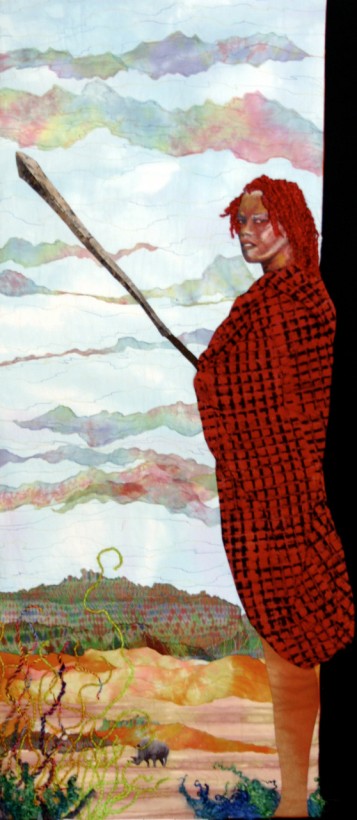
“Shuka” =  All my life I have been entranced by Kenya, so when I met three Maasai warriors at the Wild Animal Park, I was inspired!  As we talked, only one of the warriors understood English, but when I said the only word I knew in Maasai (“shuka” which is the warrior’s special red cape), ALL the warriors wanted to speak to me, but in Maasai.

Shuka by Terry Waldron

Shuka by Terry Waldron


Kathy York, Austin, Texas-Artist, mother, and nature lover.  Also love coffee with friends, hiking, riding my bicycle, gardening, and reading.

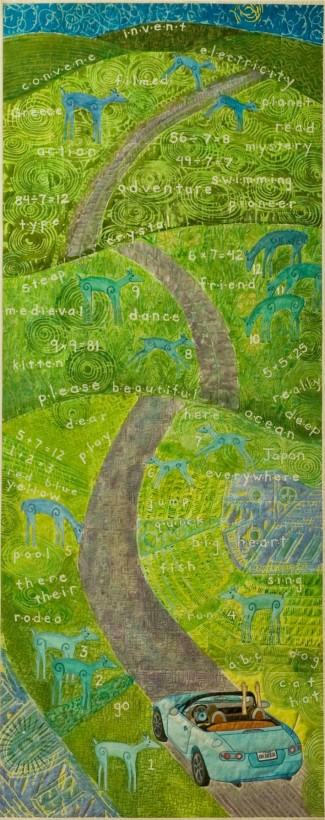
My inspiration for my quilt for Rituals was about the good times shared daily with my daughter on our way to school, whether practicing math facts, spelling, or counting the deer along the way we always manage to have fun in our little Miata with the top down!  “Morning Commute with Sweet Jane.”

Morning Commute with Sweet Jane by Kathy York

Morning Commute with Sweet Jane by Kathy York

Click here for more information on Dinner at Eight Artists


Posted in Jamie Fingal, Quilting | Tagged , , , , | Comments Off on Quilting Inspirations by Dinner at Eight Artists

Quilting Inspirations by Dinner at Eight Artists

Rituals~Featured at International Quilt Market/Festival

Havel’s Scissors is proud to be a sponsor of Rituals by Curators, Jamie Fingal and Leslie Tucker Jenison.  Jamie and Leslie, along with forty artists, have come together to reveal the art that can be found in everyday life.  I had the privilege to see the exhibit at the International Quilt Festival in Houston this year.  The ingenuity of the artwork in the exhibit is nothing short of spectacular!  Each artist tells a story through the threads of the fabric.  And the stories that are woven through each piece will inspire you to live life to the fullest and appreciate each and every opportunity we are given to share with loved ones.

Sarah Ann Smith, Hope, Maine-Artist, Author, former US diplomat, Mother, Quilter, Reader, (perpetual) Student, Teacher, Wife.

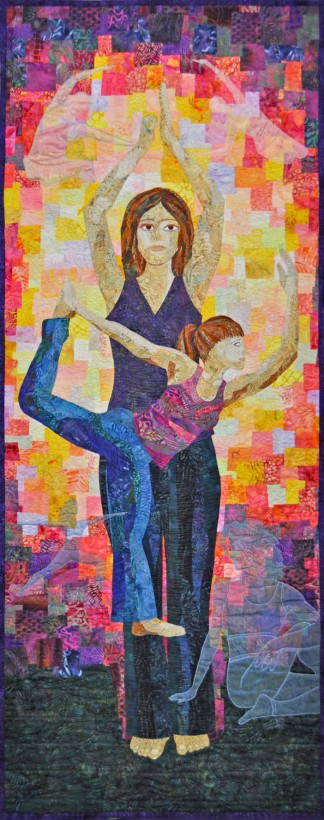
The theme truly challenged me, and it wasn’t until I realized that my twice-a-week exercise class was the ritual I wanted to make.  “Strength and Calm.”  For the first time in my life, I am enjoying the work to strengthen and tone my body.  I feel invigorated, the way I feel after a good day in the studio! Passions/hobbies:  laughing with the pug, photography, my sons, sketching, reading.

Strength and Calm by Sarah Ann Smith

Strength and Calm by Sarah Ann Smith


Virginia A. Spiegel, Bryon, Illinois- Artist, writer, photographer, landscape gardening, travel, farmers markets.

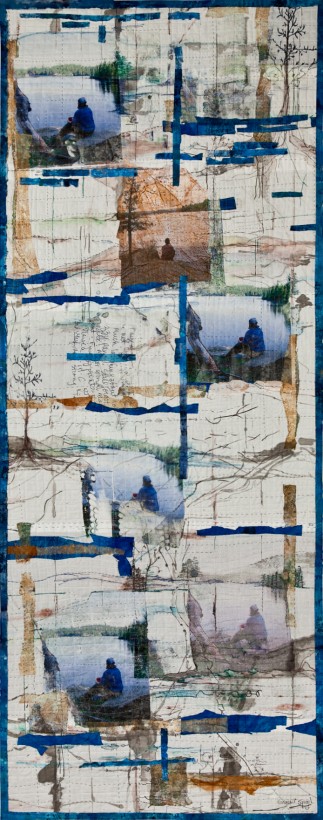
The Boundary Waters is a wilderness area that continues to inspire my artwork.  My sister and I work hard paddling through its many pristine lakes, but we also spend a lot of time just sitting on the rocks and looking “Boundary Waters 60”.

Boundary Waters 60 (Rock Time) by Virginia Spiegel

Boundary Waters 60 (Rock Time) by Virginia Spiegel


Larkin Jean Van Horn, Whidbey Island, Washington- Artist, author, teacher, curator, traveller, seeker, listener, wife, step-mother, daughter, sister, friend.

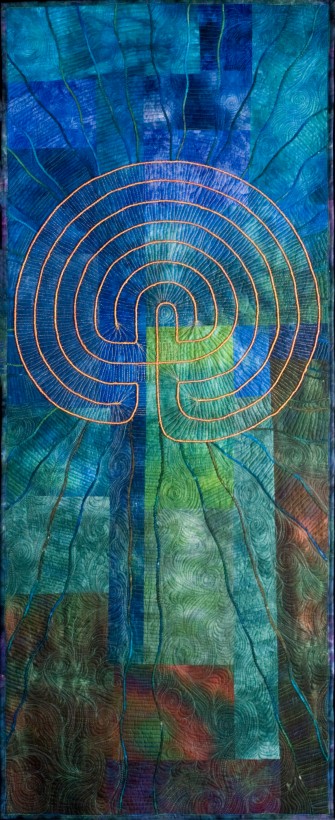
“Solvitur Ambulando” refers to walking meditation, and how the repetitive motion of putting one foot in front of the other can be an aid to deep thinking.  The colors invoke the place I usually walk – on the beach, not far from my home.  The labyrinth, though not a necessary part of the process, speaks to the mindful, intentional, thoughtful method of examining one’s life and purpose. Interests:  Beadwork in many forms, choral music, photography, reading, movies.

Solvitur Ambulando by Larkin Jean Van Horn

Solvitur Ambulando by Larkin Jean Van Horn

 CLICK HERE FOR MORE ON DINNER AT EIGHT ARTISTS

Posted in Jamie Fingal, Mixed Media | Tagged , , , , | Comments Off on Quilting Inspirations by Dinner at Eight Artists